Open Networked Learning

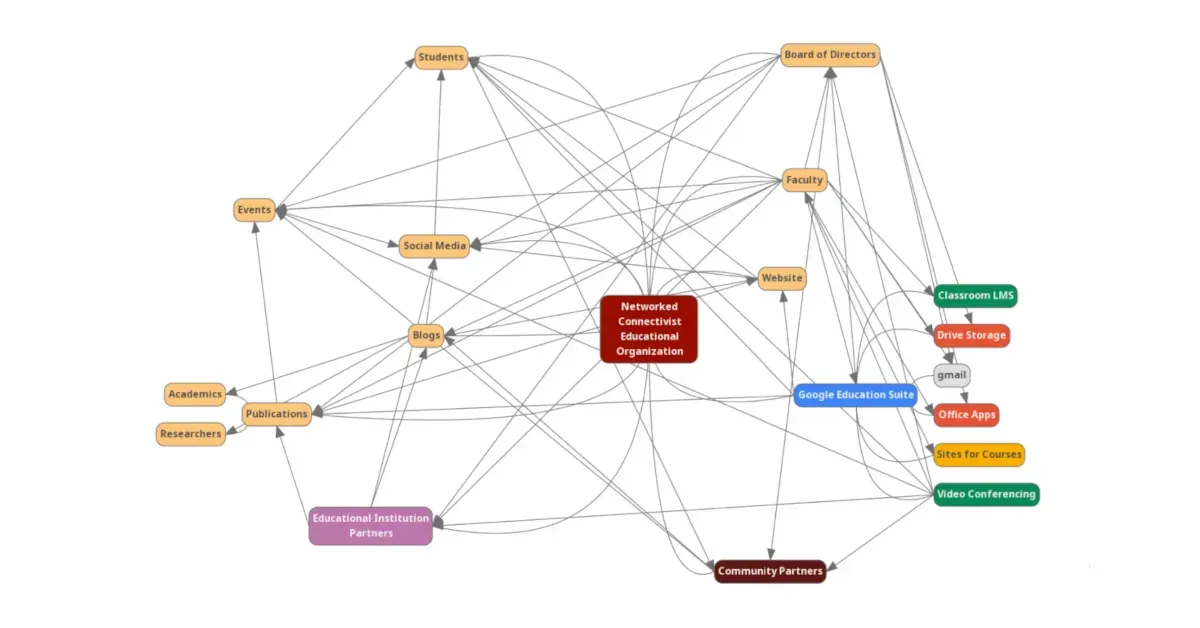
I’ve always loved tools, or, technology. Learning “Indian” crafts and lapidary jewelry making and playing musical instruments as a boy led me to become a professional craftsman. I took a glassblowing class in college and immediately recognized it as a way to combine many of my skills; musical breathing, ensemble and improvisation; lapidary tool use; and creativity. Glass also led me to the study of history and materials and cultures.
For me, the anxiety is not in engaging with tools, but it's the engaging with the tools that produces the anxiety. Many of them are difficult to use, and digital tools are constantly changing, which requires figuring out new ways to use them, or new ways to do what you're used to doing.
Openness, or sharing in public is often daunting. Writing and publishing, speaking or performing, or submitting artwork for critique all open the creator to hearing things that may be hurtful. Often, we can learn from this feedback, even if we have made mistakes. Now, in the current climate, sharing openly often involves some level of self-censorship, highlighting the tension between self-expression and self-protection.
Most of the faculty I work with resist engaging with digital tools. They have no interest in digital technologies. My position is that they have a duty to learn the affordances of digital technology to support their students and continue their professional development.
I use Reuben Puentedura's SAMR Model to illustrate the educational, or learning possibilities after developing digital literacy. It is understandable that novices try to do the same things with new tools, but courses like Open Networked Learning allow participants to move along the SAMR continuum.
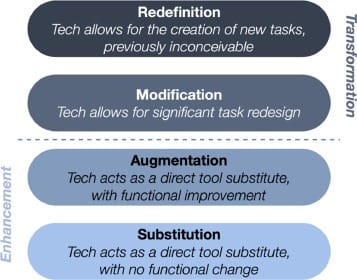
Illustration from “A scoping review of the application of the SAMR model in research” https://doi.org/10.1016/j.caeo.2022.100093
It's important to remind ourselves that this is not a rigid, linear landscape, but that engagement with technology requires a personalized and iterative approach.
ONL PBL groups express the experience they bring through the tools they select and the issues in the scenario they choose to highlight. For Topic 1, Group 2 has focused on digital tools, while Group 5 focused on the anxiety of learning to use them. To me, this shows how participants are expressing what they bring to ONL261. In my work I often use the word ‘textism’ to highlight the structure of higher education, which has unfortunately been eliminating other forms of expression like music, dance, and other art forms. As a retired craftsman and now a critical digital humanist, I try to combine different forms of media in every interaction. All these ways of expression are welcome in Online Networked Learning!